
Seaweed Cultivation Market – Global Forecast 2025-2032: Adoption of Circular Economy Principles in Seaweed Biomass Processing for Bioplastic and Biofuel Production

- Advertisement -
The seaweed cultivation market presents opportunities through sustainable growth, driven by its role in climate change mitigation and food security. Key areas include biofuel, bioplastic, and biopharmaceuticals. Regional potentials, technological innovation, and cross-sector partnerships further catalyze its expansion.
Seaweed Cultivation Market
Dublin, Jan. 13, 2026 (GLOBE NEWSWIRE) — The “Seaweed Cultivation Market – Global Forecast 2025-2032” has been added to ResearchAndMarkets.com’s offering.
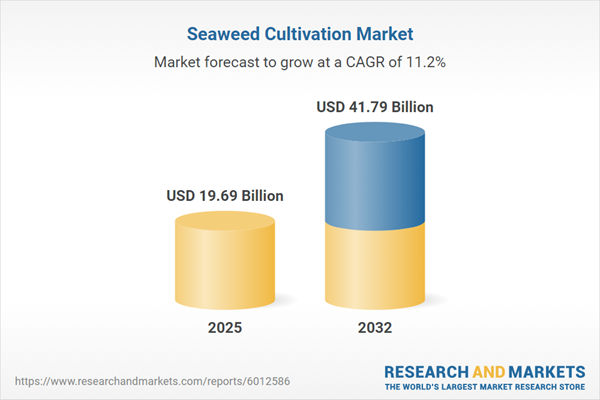
The Seaweed Cultivation Market is experiencing notable growth, expanding from USD 17.81 billion in 2024 to USD 19.69 billion in 2025, and is projected to reach USD 41.79 billion by 2032 at a CAGR of 11.24%.
Seaweed cultivation is pivotal in addressing global sustainability while driving economic growth across industries. Its rapid growth and nutrient uptake facilitate carbon sequestration, enhance coastal ecosystems, and produce biomass for biofuel, bioplastic, and biopharmaceutical uses, highlighting its critical role in sustainable strategies.
Technological and Policy Advancements
Technological innovations, coupled with evolving regulatory frameworks, are significantly transforming seaweed cultivation. Precision tools such as IoT sensors and real-time data analytics optimize nutrient delivery and track growth, enabling scalable operations and reducing variability. The streamlined permit processes and environmental safeguards from regulatory bodies incentivize responsible practices. These advances enhance operational efficiency and open avenues for competitive advantage through strategic planning.
Economic Impact of U.S. Tariffs
In 2025, new tariffs in the United States significantly impacted the seaweed supply chain, influencing import/export dynamics and cost structures. Processors facing heightened duties have been reconsidering supplier networks and investing in domestic cultivation to mitigate trade barriers. Stakeholders are forming partnerships to develop resilient strains and exploring tariff exemptions, emphasizing strategic market entry and risk mitigation opportunities.
Market Segmentation
Seaweed is categorized by type, cultivation method, form, and application. Varieties such as brown, green, and red seaweed serve different industrial needs. Offshore and onshore cultivation methods offer distinct operational benefits. Product forms, including flakes, liquids, powders, and sheets, cater to varied manufacturing needs, supporting sectors from agriculture and cosmetics to pharmaceuticals. Understanding these segments enables informed decision-making and targeted investment strategies.
Regional Insights
The Americas, EMEA, and Asia-Pacific regions display unique growth patterns. North America advances in infrastructure supporting large-scale farms, while Latin America leverages favorable climates. Europe’s stringent standards foster integration with aquaculture systems. Asia-Pacific leads with established production in China and Japan, with emerging markets like India adopting new methodologies. Recognizing regional trends is vital for crafting effective market expansion strategies.
Strategic Company Analysis
Leading companies are engaging in innovation, partnerships, and sustainability initiatives to secure competitive advantages. By integrating advanced cultivation analytics and exploring biotechnology collaborations, these enterprises optimize production and expand capabilities. Sustainable practice certifications enhance positioning and premium pricing access, emphasizing the importance of sustainable growth for competitive differentiation.
Key Takeaways from This Report
- Technological advancements and policy reforms are reshaping industry practices, improving efficiency and sustainability.
- U.S. tariffs have prompted reevaluation of supply chains, emphasizing the need for strategic adaptability and domestic investment.
- Market segmentation analysis highlights opportunities for value creation across various sectors and regions.
- Regional dynamics provide insights into strategic growth opportunities aligned with local advantages and global trends.
- Innovation and sustainability initiatives are key to securing competitive advantages in the evolving seaweed market.
Research Approach
This report is based on extensive research, including expert interviews, field observations, and data compilation. The methodology integrates qualitative and quantitative insights to deliver a comprehensive analysis. By examining regulatory landscapes, operational challenges, and innovation cycles, the findings provide strategic pathways for stakeholders to capitalize on the booming seaweed market.
Conclusion
The future of the global seaweed cultivation sector is shaped by technological, regulatory, and market forces. Embracing innovation, adapting to policy shifts, and leveraging market segmentation insights will drive competitive advantage and resilience. Strategic planning and sustainable practices will ensure continued growth in this pivotal market.
Key Attributes:
| Report Attribute | Details |
| No. of Pages | 180 |
| Forecast Period | 2025 – 2032 |
| Estimated Market Value (USD) in 2025 | $19.69 Billion |
| Forecasted Market Value (USD) by 2032 | $41.79 Billion |
| Compound Annual Growth Rate | 11.2% |
| Regions Covered | Global |
Market Insights
- Integration of automation technologies in offshore seaweed farming operations to increase yield efficiency
- Development of selective breeding programs to enhance seaweed strain resilience to climate change impacts
- Commercial scale production of bioactive compounds from brown seaweed for nutraceutical applications
- Coastal multi-trophic aquaculture systems combining seaweed and shellfish to improve environmental sustainability
- Implementation of remote sensing and satellite monitoring for real-time tracking of seaweed farm health
- Adoption of circular economy principles in seaweed biomass processing for bioplastic and biofuel production
- Expansion of seaweed farming into deepwater systems using anchored longline cultivation and AI optimization
Competitive Landscape
- Market Share Analysis, 2024
- FPNV Positioning Matrix, 2024
- Competitive Analysis
- Acadian Seaplants Limited
- Algaia S.A.
- AquAgri Processing Private Limited
- Atlantic Sea Farms
- ATSEANOVA NV
- Beijing Leili Agricultural Co., Ltd.
- Blue Evolution Sea Farms Pty Ltd.
- Cargill, Incorporated
- DuPont de Nemours, Inc.
- Groupe Roullier
- Kaly Group
- Mara Seaweed
- MYCSA AG, Inc.
- Nordic SeaFarm AB.
- Ocean Rainforest
- Qingdao Seawin Biotech Group Co. Ltd.
- Sea6 Energy AB
- Seakura Limited
- The Seaweed Company
- Thorverk HF
For more information about this report visit https://www.researchandmarkets.com/r/sl6nov
About ResearchAndMarkets.com
ResearchAndMarkets.com is the world’s leading source for international market research reports and market data. We provide you with the latest data on international and regional markets, key industries, the top companies, new products and the latest trends.
Attachment
CONTACT: CONTACT: ResearchAndMarkets.com Laura Wood,Senior Press Manager press@researchandmarkets.com For E.S.T Office Hours Call 1-917-300-0470 For U.S./ CAN Toll Free Call 1-800-526-8630 For GMT Office Hours Call +353-1-416-8900
 Disclaimer: The above press release comes to you under an arrangement with GlobeNewswire. Agrigate Global takes no editorial responsibility for the same.
