
Halal Food Market Trends and Growth Outlook (2026-2034) by Product, Distribution Channel and Region

- Advertisement -
The halal food market is growing rapidly, driven by rising Muslim populations, multiculturalism, and consumer demand for transparent and ethical production
Halal Food Market
Dublin, April 20, 2026 (GLOBE NEWSWIRE) — The “Halal Food Market Size, Share, Trends and Forecast by Product, Distribution Channel, and Region, 2026-2034” has been added to ResearchAndMarkets.com’s offering.
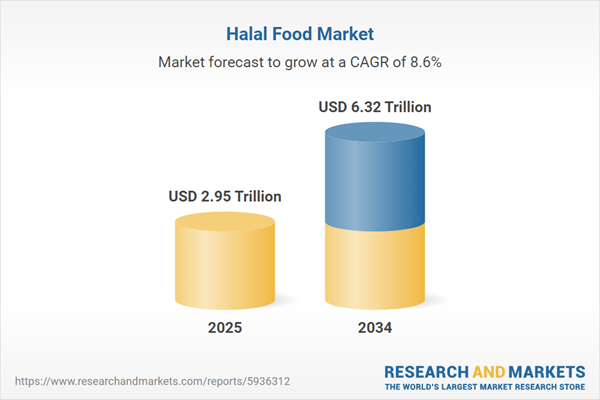
The global halal food market is projected to experience notable growth, with its value estimated at USD 2.95 trillion in 2025 and anticipated to reach USD 6.32 trillion by 2034, growing at a CAGR of 8.56% from 2026-2034. The Asia Pacific region leads the market, holding a significant share of over 48.5% in 2025. Growth drivers include rising awareness, rapid multiculturalism, globalization, stringent standardization, the expansion of e-commerce, and increasing health and safety concerns.
The demand for halal-certified food is propelled by the Muslim community’s requirements. Halal certification plays a critical role, promoting trust and authenticity. The emphasis on transparency attracts not just Muslim consumers but also health-conscious individuals and those inclined towards ethically produced goods. Governmental and organizational regulations within Muslim-majority countries have reinforced consumer confidence through standardized halal certification processes.
The United States is a key region due to factors such as the increasing Muslim population, which is expanding halal options in grocery stores, restaurants, and food service outlets. Non-Muslim consumers in the U.S. are drawn to halal products due to perceptions of superior quality, ethical sourcing, and hygienic production. This is particularly popular among Millennials and Gen Z, who seek alignment with ethical and sustainable food practices.
Increasing Muslim Population
The global increase in the Muslim population is driving demand for halal-certified food due to strong religious adherence. Countries with substantial Muslim populations like Indonesia are witnessing greater demand, prompting retailers to expand offerings of halal-certified products. Quick-service restaurants and other dining establishments are increasing halal-certified options to meet this demand.
Rising Consumer Awareness, Multiculturalism, and Globalization
Halal-certified products address the growing consumer demand for transparency and ethical production. Halal foods are becoming more accessible globally due to factors like multiculturalism and globalization, with e-commerce transforming the landscape by facilitating the purchase of certified items online. The e-commerce sector is expected to reach USD 183.8 trillion by 2032, with a CAGR of 27.16% from 2024 to 2032.
Increasing Health and Safety Concerns
Health and safety concerns are increasing demand for halal food. Consumers prioritize ethically sourced, hygienically processed, and nutritionally beneficial foods. Trends like clean eating, mindful eating, and plant-based diets align with halal food standards, reinforcing its appeal across diverse consumer segments.
HALAL FOOD INDUSTRY SEGMENTATION
Analysis by Product:
- Meat, Poultry, and Seafood
- Fruits and Vegetables
- Dairy Products
- Cereals and Grains
- Oil, Fats, and Waxes
- Confectionery
- Others
Meat, poultry, and seafood dominate the market with a 50.3% share in 2025. The segment’s growth is driven by increased consumption of halal meats and seafood among Muslim populations, supported by stringent certification processes.
Analysis by Distribution Channel:
- Traditional Retailers
- Supermarkets and Hypermarkets
- Online
- Others
Traditional retailers hold 51.7% of the market share, playing a vital role in distribution, especially in culturally inclined regions. They provide a variety of halal products with personalized consumer services.
Regional Analysis:
- Asia Pacific
- Middle East and Africa
- Europe
- North America
- Latin America
The Asia Pacific region drives the global market due to its large Muslim population and well-established halal industries. There’s a growing demand for convenience-focused halal items and plant-based alternatives. In 2024, Deli Halal launched a new line of halal-certified slic
KEY REGIONAL TAKEAWAYS
UNITED STATES HALAL FOOD MARKET ANALYSIS
The U.S. halal food market is growing due to the rising Muslim population and increased consumer awareness towards halal certification. The U.S. is expected to have 8.1 million Muslims by 2050, fueling the demand for halal food. Mainstream retail outlets like Walmart and Costco are increasing accessibility to these products.
EUROPE HALAL FOOD MARKET ANALYSIS
Europe’s halal market is expanding with an increasing Muslim population, exemplified by 3.9 million Muslims in the UK. The demand for halal poultry and other products is significant, prompting retailers to expand product lines and marketing strategies.
ASIA PACIFIC HALAL FOOD MARKET ANALYSIS
The Asia Pacific region sees strong growth driven by its large Muslim population. Countries like China and Indonesia lead in demand for halal products, which is supported by rising disposable incomes and changing consumer preferences.
LATIN AMERICA HALAL FOOD MARKET ANALYSIS
Latin America, led by Brazil, is pivotal in the global halal market. Brazil’s status as a leading chicken meat exporter is supported by robust trade ties with Muslim-majority countries and an effective halal certification system.
MIDDLE EAST AND AFRICA HALAL FOOD MARKET ANALYSIS
MEA’s halal food market growth is driven by the increasing Muslim population and consumer demand for halal products. Companies like Tanmiah Food and Al Islami Foods are expanding operations regionally and globally, reflecting robust market dynamics.
COMPETITIVE LANDSCAPE
Major players in the halal food market are expanding product offerings and utilizing digital marketing and e-commerce strategies. Companies like Al Islami Foods are launching new product lines and focusing on untapped markets.
KEY QUESTIONS ANSWERED IN THIS REPORT
- How big is the halal food market?
- What is the future outlook of the halal food market?
- What are the key factors driving the halal food market?
- Which region accounts for the largest halal food market share?
Key Attributes
| Report Attribute | Details |
| No. of Pages | 144 |
| Forecast Period | 2025-2034 |
| Estimated Market Value (USD) in 2025 | $2.95 Trillion |
| Forecasted Market Value (USD) by 2034 | $6.32 Trillion |
| Compound Annual Growth Rate | 8.5% |
| Regions Covered | Global |
Companies Featured:
- Al Islami Foods Co.
- QL Foods Sdn Bhd
- Saffron Road
- DagangHalal Group
- Janan Meat Ltd
- Kawan Foods Berhad
- Cargill Inc.
- Prima Agri-Products Sdn Bhd
- Nestle S.A.
- BRF S.A.
- Tahira Foods Ltd
For more information about this report visit https://www.researchandmarkets.com/r/oz8o10
About ResearchAndMarkets.com
ResearchAndMarkets.com is the world’s leading source for international market research reports and market data. We provide you with the latest data on international and regional markets, key industries, the top companies, new products and the latest trends.
Attachment
CONTACT: CONTACT: ResearchAndMarkets.com Laura Wood,Senior Press Manager press@researchandmarkets.com For E.S.T Office Hours Call 1-917-300-0470 For U.S./ CAN Toll Free Call 1-800-526-8630 For GMT Office Hours Call +353-1-416-8900
 Disclaimer: The above press release comes to you under an arrangement with GlobeNewswire. Agrigate Global takes no editorial responsibility for the same.
